

The Ultimate Guide to Catios: How to Create a Safe Outdoor Sanctuary for Your Cat
If you share your home with a feline friend, you are likely intimately familiar with the "Great Cat Dilemma."
On one hand, you look out the window at the bustling world of birds, fluttering leaves, and warm sunbeams, and you want nothing more than to let your cat experience the joy of nature. On the other hand, the reality of the modern outdoors—rife with fast-moving traffic, territorial neighborhood cats, foxes, toxic plants, and the risk of theft—makes opening that back door a source of immense anxiety.
For decades, cat owners were forced to make a difficult choice: keep their cats strictly indoors and risk boredom and obesity, or let them roam free and risk their safety.
Today, there is a perfect, uncompromising solution: The Catio.
A "catio" (a portmanteau of cat and patio) is an enclosed outdoor cat house or run that allows your pet to experience the sights, sounds, and smells of the great outdoors in a 100% secure, hazard-free environment.
In this definitive, cornerstone guide, we are going to explore everything you will ever need to know about catios. We will dive deep into the feline psychology of outdoor enrichment, the structural engineering required to keep predators out, navigating UK planning permissions, how to design the perfect interior layout, and why investing in a heavy-duty, pressure-treated Catio & Outdoor Cat House from Arbor Garden Solutions is the ultimate way to upgrade your cat’s quality of life.
Grab a cup of coffee (and perhaps a handful of treats for your cat), and let’s explore how to build the ultimate feline sanctuary.
Part 1: The Great Feline Dilemma (Indoor vs. Outdoor)
To understand why catios have surged in popularity across the UK, we must first look at the biological and environmental realities of keeping a pet cat in the modern world.
The Risks of the Great Outdoors
While a cat’s natural instinct is to roam, hunt, and patrol territory, the modern suburban and urban environment is not the African savanna or the ancient Fertile Crescent where their ancestors evolved. Today, the outdoor world is incredibly hostile to small felines.
-
Traffic Accidents: Road traffic accidents are the leading cause of sudden death for outdoor cats in the UK. Even the most street-smart cat can be startled by a loud noise and dart into the path of a vehicle.
-
Feline Diseases: Roaming cats frequently encounter feral or unvaccinated felines. Deep bite wounds from territorial fights are the primary transmission vector for Feline Immunodeficiency Virus (FIV) and Feline Leukemia Virus (FeLV), both of which are incurable.
-
Predators and Poisons: Foxes, while generally wary of adult cats, can and do attack kittens and older felines. Furthermore, the outdoor world is filled with human-made toxins. Antifreeze (ethylene glycol) tastes sweet to animals but is highly fatal. Rat poison, ingested either directly or by eating a poisoned rodent, is another massive risk.
-
Theft and Getting Lost: Pedigree cats (like Bengals, Maine Coons, and Ragdolls) are frequently targeted by thieves. Additionally, cats can easily become trapped in neighbors' sheds or garages.
The Hidden Dangers of an "Indoor-Only" Life
Given the risks above, many owners wisely choose to keep their cats indoors. However, an exclusively indoor life comes with its own set of severe challenges.
Cats are obligate carnivores with predatory instincts. They are hardwired to climb, scratch, stalk, and sprint. When confined entirely to the interior of a house—especially smaller flats or homes without adequate vertical space—they often suffer from:
-
Feline Obesity: Without trees to climb or prey to chase, indoor cats burn a fraction of the calories of their outdoor counterparts. Obesity leads to diabetes, joint pain, and a significantly shortened lifespan.
-
Behavioral Issues: A bored cat is a destructive cat. Lack of stimulation often manifests as excessive vocalization, scratching furniture, aggressive play-biting, or over-grooming (leading to bald patches).
-
Feline Lower Urinary Tract Disease (FLUTD): Veterinary studies have strongly linked idiopathic cystitis (bladder inflammation) to environmental stress and boredom in indoor cats.
The Catio Compromise
This is where the catio changes everything. A high-quality outdoor cat house acts as a sensory bridge. It provides the immense psychological and physical stimulation of the outdoors—the breeze, the chattering birds, the changing seasons—while putting a physical, heavy-duty barrier between your cat and the dangers of the world. It is, quite simply, the best of both worlds.
Part 2: The Biological and Psychological Benefits of a Catio
You might look at a wooden enclosure and see a cage. Your cat, however, sees a sensory playground. Let’s break down exactly what a catio does for your cat's brain and body.
1. Olfactory and Auditory Enrichment
A cat's sense of smell is roughly 14 times stronger than a human's. Their hearing can detect the ultrasonic squeaks of rodents hidden in the grass. Inside a house, the sensory environment is sterile and static; it smells like laundry detergent and sounds like the television.
Inside a catio, the environment is dynamic. Every breeze brings a new wave of olfactory information—the scent of rain, a passing dog, a blooming flower. This constant influx of data keeps their brains actively engaged, warding off cognitive decline in senior cats and burning mental energy in young, hyperactive kittens.
2. Safe Sunbathing and Thermoregulation
Have you ever noticed your cat constantly moving to sleep in the one square patch of sunlight on your living room rug? Cats have a higher basal body temperature than humans (around 38.3°C to 39.2°C). They love heat because it requires less metabolic energy to stay warm.
A catio provides a safe space for uninterrupted sunbathing. The natural sunlight also helps regulate their circadian rhythms, which can improve their sleep cycles and reduce nighttime restlessness (the dreaded 3:00 AM "zoomies").
3. Territory Expansion
Cats are highly territorial. In a multi-cat household, tension can easily build if cats feel they do not have enough distinct spaces to claim as their own. A catio effectively adds a massive new "room" to your house. This extra territory allows cats to time-share spaces, reducing inter-cat aggression and providing a neutral retreat when they want to escape the hustle and bustle of a busy family home.
4. Protecting Local Wildlife
It is not just your cat that benefits. The RSPB estimates that cats catch up to 27 million birds every year in the UK. By containing your cat within a catio, you are allowing them to engage their prey drive by watching and chattering at birds, without actually decimating the local songbird population.
Part 3: Types of Catios and Outdoor Cat Houses
Catios are not one-size-fits-all. The design you choose will depend on your available outdoor space, your budget, and how you want your cat to access the enclosure.
1. The Window Box Catio
This is the smallest variant, essentially acting as a robust balcony attached to the outside of a ground-floor or first-floor window.
-
Best for: Flats, apartments, or homes with zero garden space.
-
Pros: Requires no ground space; easy to access via a window.
-
Cons: Very limited movement; usually only big enough for sitting, not walking or climbing.
2. The Balcony Enclosure
For those living in apartments with balconies, the entire balcony can be netted or framed with timber and mesh.
-
Best for: High-rise apartments.
-
Pros: Maximizes existing outdoor space.
-
Cons: Requires careful installation to ensure strata/building management compliance, and high winds can be an issue.
3. The Freestanding Catio (Outdoor Cat House)
This is a large, standalone structure built in the garden, functioning similarly to an aviary or a premium shed. Cats are typically carried to the enclosure or walk there via a harness.
-
Best for: Large gardens, or owners who want a massive, dedicated play area.
-
Pros: Can be built as large as you want; can include full-sized trees, massive climbing frames, and human seating.
-
Cons: Requires the owner to manually transfer the cat back and forth, which limits the cat's ability to retreat indoors if they get spooked by a loud noise.
4. The Lean-To / Attached Cat Run (The Gold Standard)
This is the most popular and practical design. The catio is constructed using the exterior wall of your house as its back wall. A cat flap is installed in a window, door, or straight through the masonry, allowing the cat 24/7 free access to the enclosure.
-
Best for: Almost all homeowners.
-
Pros: Total freedom for the cat. They can go outside to use the litter box, get fresh air, and return inside to sleep without bothering you to open a door.
-
Cons: Requires altering a window or door to fit a cat flap.
Part 4: Crucial Structural Design Elements (Why Cheap Catios Fail)
If you search the internet for "catio," you will find hundreds of cheap, flat-pack enclosures imported from overseas, made from thin, untreated fir wood and flimsy chicken wire.
Do not buy them.
A catio is an exterior structure that must withstand the brutal, wet British winter, high winds, and the sharp teeth of urban foxes. Let's break down the engineering of a truly safe outdoor cat house, and why materials matter.
1. The Timber Framework
Cats love to jump, and the kinetic force of a 6kg Maine Coon launching itself from the floor to a top shelf is immense. If the framework is made of 10mm thick imported softwood, the structure will wobble, warp, and eventually snap.
-
What you need: Heavy-duty, structural-grade timber.
-
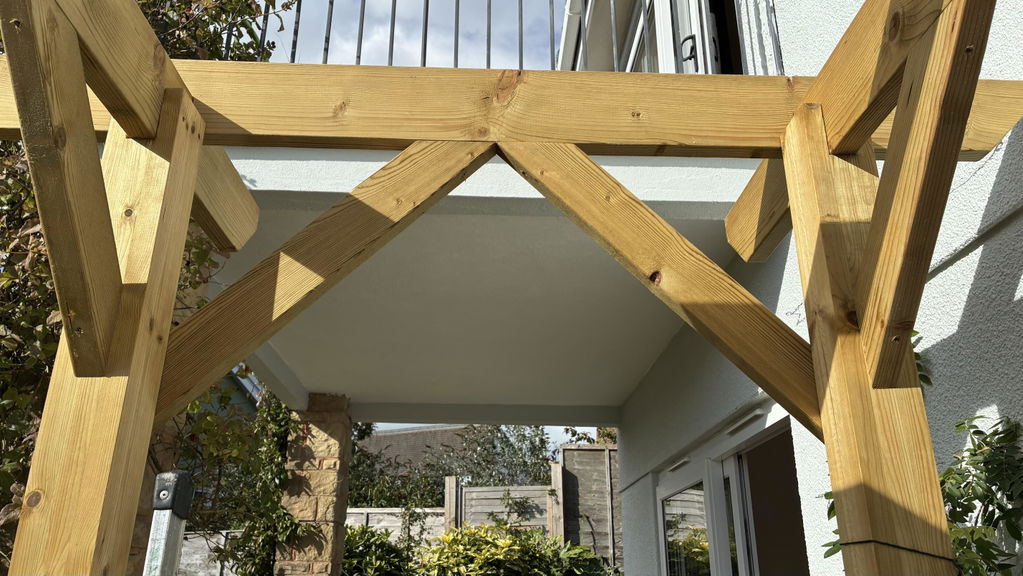
The Arbor Garden Solutions Standard: When we build our Catios and Outdoor Cat Houses, we use thick, robust, construction-grade timber framework. Our structures are heavy, dead-flat, and designed so that if a heavy cat leaps against the mesh, the frame does not shudder.
2. Wood Preservation (The Rot Factor)
A wooden structure sitting on damp UK soil or a wet patio will rot from the bottom up within 18 months if it is not properly treated. Many cheap catios simply have a layer of water-based orange stain painted on them. This is purely cosmetic.
-
What you need: Pressure-treated (tanalised) wood.
-
The Arbor Garden Solutions Standard: All of our timber undergoes a deep, industrial pressure-treatment process. Preservatives are forced deep into the cellular structure of the wood under massive pressure. This ensures long-term, year-round resistance to fungal decay, wet rot, and wood-boring insects. You will not have to spend your weekends desperately painting toxic chemical sealers onto your catio just to keep it standing.
3. The Mesh (Keeping Cats In, Keeping Foxes Out)
This is the most critical safety feature of any catio.
Never use chicken wire. Chicken wire is designed to keep chickens in; it is incredibly thin, rusts quickly, and its hexagonal twists can easily be untwisted by a determined cat or bitten straight through by a hungry fox. Furthermore, cheap wire has sharp burs that can tear a cat’s delicate paw pads if they climb it.
-
What you need: Galvanized welded steel mesh.
-
The Arbor Garden Solutions Standard: We use premium, heavy-gauge, galvanized weld mesh. The squares are small enough that a cat cannot get their head stuck, but the wire is thick enough that a predator cannot bite through it. Because it is galvanized, it will not rust and snap after a heavy winter rain.
4. The Roofing System
A catio needs a roof to keep your cat dry and to stop them from simply climbing over the top. You have three main options:
-
Mesh Roof: Great for letting in maximum sunlight and rain (if you have grass inside), but provides no shelter from bad weather.
-
Felted Timber Roof: Provides total shade and rain protection, creating a cozy, shed-like feel.
-
Polycarbonate Roofing: The best of both worlds. Translucent polycarbonate sheets keep the rain out while allowing sunlight to stream in, keeping the catio warm and bright.
Part 5: Do I Need Planning Permission for a Catio in the UK?
One of the most common questions we get is regarding the legality of building a cat run in the garden. Navigating the UK planning system can feel overwhelming, but for the vast majority of homeowners, a catio is a simple, stress-free addition.
Disclaimer: Planning laws can vary by local authority. Always check with your local council if you are unsure, particularly if you live in a Listed Building or a Conservation Area.
The Rules of Permitted Development
In the UK, a freestanding catio or a lean-to cat run generally falls under Permitted Development (PD) rights as an "outbuilding" or "enclosure." This means you do not need to apply for formal planning permission, provided your structure meets the following strict criteria:
-
Placement: The catio cannot be placed forward of the principal elevation of your house (i.e., you cannot build it in your front garden facing the street). It must be in the side or rear garden.
-
Total Area: The total area of all outbuildings (including your new catio, existing sheds, and greenhouses) must not exceed 50% of the total area of land around your original house.
-
Height Restrictions (Crucial):
-
If the catio is situated within 2 metres of a property boundary (e.g., your neighbor's fence), the maximum overall height cannot exceed 2.5 metres (8.2 ft).
-
If it is situated more than 2 metres from a boundary, it can be up to 3 metres high for a flat/mono-pitch roof, or 4 metres high for a dual-pitched roof.
-
-
Use: It must be for domestic pet use, not for running a commercial cattery or breeding business.
Because most standard catios are built at around 2 to 2.4 metres high, they comfortably bypass the need for planning permission, allowing you to erect them instantly.
What if I Rent?
If you live in a rented property, you must obtain written permission from your landlord before erecting a catio, especially if you plan to screw it into the exterior brickwork of the house or cut a hole for a cat flap. If you rent, consider a freestanding catio that sits on the patio and is accessed via an open window, as this causes zero structural changes to the property and can be dismantled when you move.
Part 6: How to Enrich the Inside of Your Catio (Designing the Ultimate Interior)
Buying the structural framework is only step one. An empty wooden box is not a sanctuary. To make your catio a place your cat actually wants to spend time, you must think in three dimensions.
Cats are semi-arboreal creatures. In the wild, they seek high vantage points to survey for prey and avoid predators. If you only provide floor space, you are wasting 80% of the catio's potential.
1. Vertical Space: Shelves, Ramps, and Runways
Use the sturdy vertical posts of your Arbor Garden Solutions catio to install a network of heavy-duty timber shelves.
-
The Staircase: Create a staggered stepping-stone effect on one wall so your cat can hop all the way to the ceiling.
-
The Perimeter Runway: Install a long, continuous shelf just below the roofline. Cats love to pace along high edges and look down on the garden.
-
Hammocks: String a canvas hammock between two corner posts for the ultimate sunbathing spot.
2. The Scratching Station
Outdoor catios are the perfect place for messy scratching posts that you don't want in your living room. Instead of buying a sisal rope post, bring nature inside. Find a thick, dry log with rough bark (like oak or ash) and securely bolt it upright to the catio frame. Your cat will love digging their claws into real wood.
3. Feline-Safe Flora (The Sensory Garden)
Adding potted plants inside the catio brings the space to life. However, many common UK garden plants (like Lilies, Tulips, Foxgloves, and Daffodils) are highly toxic and can cause fatal kidney failure in cats.
Instead, fill your catio with these 100% safe, cat-friendly plants:
-
Catnip (Nepeta cataria): The classic choice. Rolling in it provides a euphoric burst of energy followed by deep relaxation.
-
Cat Grass (Dactylis glomerata): Essential for indoor cats. Eating grass aids digestion and helps them pass hairballs naturally.
-
Spider Plants (Chlorophytum comosum): Safe to chew and fun to bat at.
-
Valerian (Valeriana officinalis): Acts as a stimulant for some cats, similar to catnip.
-
Lavender and Rosemary: Completely safe, and they make the catio smell wonderful on a hot summer day.
4. Weatherproofing and Retreats
Even if your catio has a solid roof, wind and driving rain can make it uncomfortable.
-
Include a small, enclosed wooden cubby box lined with straw or a washable blanket. If a loud noise scares the cat while they are in the catio, they need an immediate dark, enclosed space to hide in so they feel secure.
-
Consider adding a clear perspex or solid timber sheet to the lower half of the "weather-facing" side of the catio to act as a windbreak.
5. The Litter Box Solution
One of the greatest benefits of a lean-to catio is moving the litter box out of your house! Place a large, covered litter box in a quiet, ground-level corner of the catio. Your house will smell instantly better, and you will no longer be stepping on stray clay granules in your kitchen.
Part 7: Introducing Your Cat to Their New Catio
You have built the beautiful structure, filled it with shelves and catnip, and opened the door. Your cat takes one look, turns around, and goes to sleep on the sofa.
Do not panic. Cats are neophobic—they are naturally afraid of new things. Introducing a cat to a catio requires patience.
Step 1: The Open Door Policy
Prop the door or window leading to the catio open. Do not pick your cat up and force them outside. Let them discover it on their own terms.
Step 2: The High-Value Lure
Place their absolute favorite, high-value treat (like tuna, roast chicken, or a lickable treat paste) on the floor just inside the catio. The next day, place it on the first shelf. The next day, on the top shelf.
Step 3: Playtime Association
Use a feather wand toy and drag it from the living room out into the catio. Engage their prey drive. If they associate the catio with high-energy, rewarding play, they will claim it as their territory.
Step 4: Feeding Time
For a highly reluctant cat, move their evening food bowl into the catio. Hunger is an excellent motivator, and eating in the space helps them mark it with their scent.
Within a week or two, you will likely find that you cannot get them to come back inside!
Part 8: The Arbor Garden Solutions Difference – Built for a Lifetime
By now, you understand the incredible benefits of an outdoor cat enclosure, and you know exactly why flimsy, mass-produced imported cages are a waste of money and a hazard to your pet.
This is where Arbor Garden Solutions steps in.
When you browse our range of Heavy-Duty Catios and Outdoor Cat Houses, you are looking at premium, UK-manufactured timber structures built to commercial standards.
We don't build temporary cages; we build permanent architectural extensions of your home.
Why choose an Arbor Garden Solutions Catio?
-
Uncompromising Heavy-Duty Timber: We build our catios using thick, robust structural timber. They are incredibly heavy, entirely wind-proof, and designed to stand resolute in your garden for decades.
-
Deep Industrial Pressure Treatment: Every piece of wood we use is deeply pressure-treated (tanalised) before assembly. You do not need to treat the wood yourself. It is fully protected against rot and fungal decay straight out of the workshop.
-
Predator-Proof Mesh: We use high-tensile, heavy-gauge galvanized steel weld mesh. It will not rust, your cat cannot push it out, and urban foxes cannot bite through it. Your cat is 100% secure.
-
Complete Customizability: Because we manufacture our own products right here in the UK, we can tailor a catio to your exact needs. Need it to fit a specific awkward patio corner? Need it to be exactly 2.4m high to fit under a gutter? We can build a bespoke size for you—often with free height adjustments.
-
Quality Fixings: We use heavy-duty weather-resistant screws and bolts, not cheap nails that pull out over time.
Investing in an Arbor Garden Solutions catio is an investment in your peace of mind and your cat's lifelong happiness. We build the brawn; you add the love.
Part 9: Maintenance and Long-Term Care of Your Catio
Because Arbor Garden Solutions uses premium pressure-treated timber, the maintenance required for your catio is incredibly minimal. However, a little preventative care will keep it looking pristine and smelling fresh.
1. Timber Care
Over 12 to 24 months, the UV rays from the sun will naturally weather the rich timber color to an elegant, silvery-grey patina. This is a purely cosmetic change and does not affect the structural integrity or rot-resistance of the wood.
If you prefer to maintain a fresh wood look, or if you want to paint the catio to match your house windows, you can easily apply a high-quality, water-repellent, pet-safe wood stain once the wood has fully dried out (usually 3-6 months after installation).
2. Mesh and Fixing Checks
Every spring, do a quick "MOT" on your catio.
-
Check the mesh panels to ensure no falling branches have damaged the wire.
-
Use a screwdriver to check the main structural screws; natural expansion and contraction of wood through the seasons can occasionally loosen fixings slightly.
3. Interior Hygiene
If you have grass inside your catio, be aware that cats may use it as a toilet. Spot clean the grass regularly, and consider turning over the soil or replacing turf annually to prevent a build-up of ammonia smells or parasites.
Wash down any wooden shelving with a pet-safe, enzymatic cleaner (avoid bleach or phenols, which are highly toxic to cats) every few months to remove accumulated mud and dander.
Part 10: Frequently Asked Questions (FAQs)
Q: Are catios cruel? Don't cats need to roam free?
A: Absolutely not. Catios are highly endorsed by major veterinary associations and animal welfare charities (like the RSPCA and Cats Protection). A well-designed catio provides all the sensory enrichment of the outdoors without the immense risks of cars, disease, and predators. It is the most responsible way to allow a cat outdoor access.
Q: Can a cat live in a catio outside permanently?
A: We do not recommend keeping domestic cats outdoors 24/7. Catios are designed as enrichment spaces, not permanent housing. Cats are social creatures that require human interaction, climate control, and the safety of a home at night. The best setup is a lean-to catio with a cat flap, allowing the cat to come inside to sleep whenever they want.
Q: Do cats get cold in a catio during the UK winter?
A: Healthy adult cats grow a thick winter undercoat and can handle the cold surprisingly well, provided they are kept completely dry and out of the freezing wind. However, they should not be locked outside. As long as they have free access to return to your heated house via a cat flap, they will regulate their own temperature, often choosing to sit in the freezing cold for 10 minutes just to smell the winter air before running back to the radiator!
Q: Will a catio add value to my house?
A: A high-quality, heavy-duty timber structure from Arbor Garden Solutions looks like a premium garden feature, similar to a high-end pergola or summerhouse. While a flimsy wire cage might be an eyesore, a beautifully integrated timber catio can be a massive selling point to future buyers who also own pets.
Q: Can I build a catio on concrete or patio slabs?
A: Yes! In fact, building a catio on a solid patio is excellent for hygiene and prevents cats from digging out, or foxes from digging in. If you build on slabs, we recommend laying down outdoor rugs or installing multi-level wooden platforms so the cat isn't sitting on cold stone.
Conclusion: Build a Sanctuary, Not Just a Cage
The decision to transition your cat to an indoor/catio lifestyle is one of the most loving, responsible choices you can make as a pet owner. It eliminates the heart-stopping panic of a cat not returning home for dinner, drastically reduces your vet bills, and protects the local wildlife.
But your cat deserves more than a wobbly wire box. They deserve a sanctuary that engages their instincts, supports their acrobatics, and withstands the test of time.
By applying the principles of feline enrichment and structural engineering outlined in this guide, you can create an outdoor paradise that your cat will love for the rest of their life.
When you are ready to lay the foundation for that paradise, explore our premium, heavy-duty Catio and Outdoor Cat House collection at Arbor Garden Solutions.
Expertly handcrafted in the UK from unyielding timber. Because true peace of mind begins with a solid foundation.